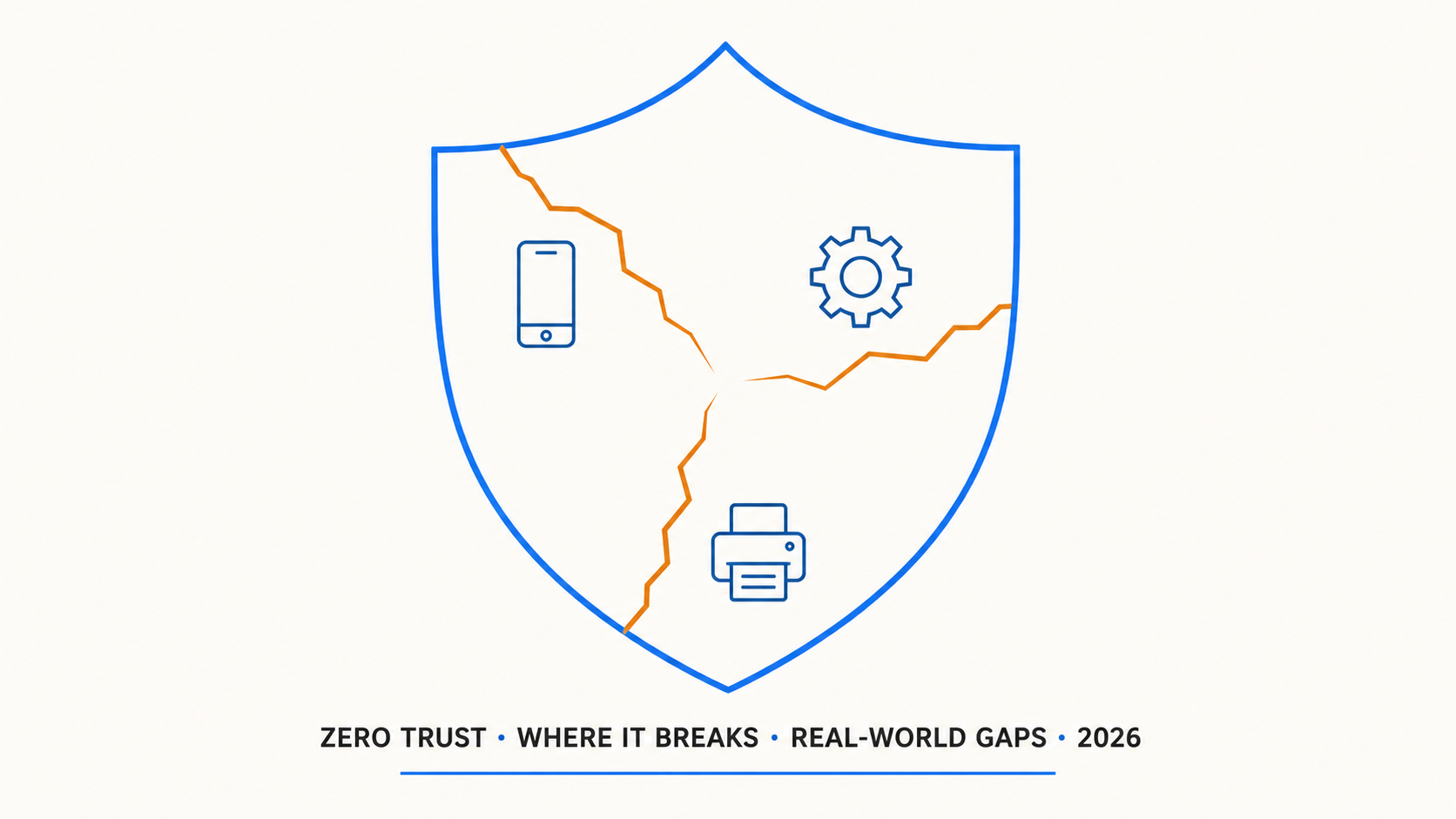
Zero Trust in the Real World: The Gaps You Cannot Ignore
Every Zero Trust deployment has gaps. The slide decks do not mention them. The vendor assessments gloss over them. But they are there, in every tenant. This article is the honest assessment: the BYOD browser gap where unmanaged browsers bypass app protection entirely, legacy apps that cannot do modern auth and sit outside the CA perimeter, printers and IoT devices that cannot authenticate, third-party VPNs that mask device posture, service accounts that cannot do MFA, guest users with unknown MFA quality and no device compliance, a gap severity matrix, and a practical gap assessment checklist. Zero Trust does not fail because of technology. It fails because of compromises made for usability, legacy systems, and operational reality.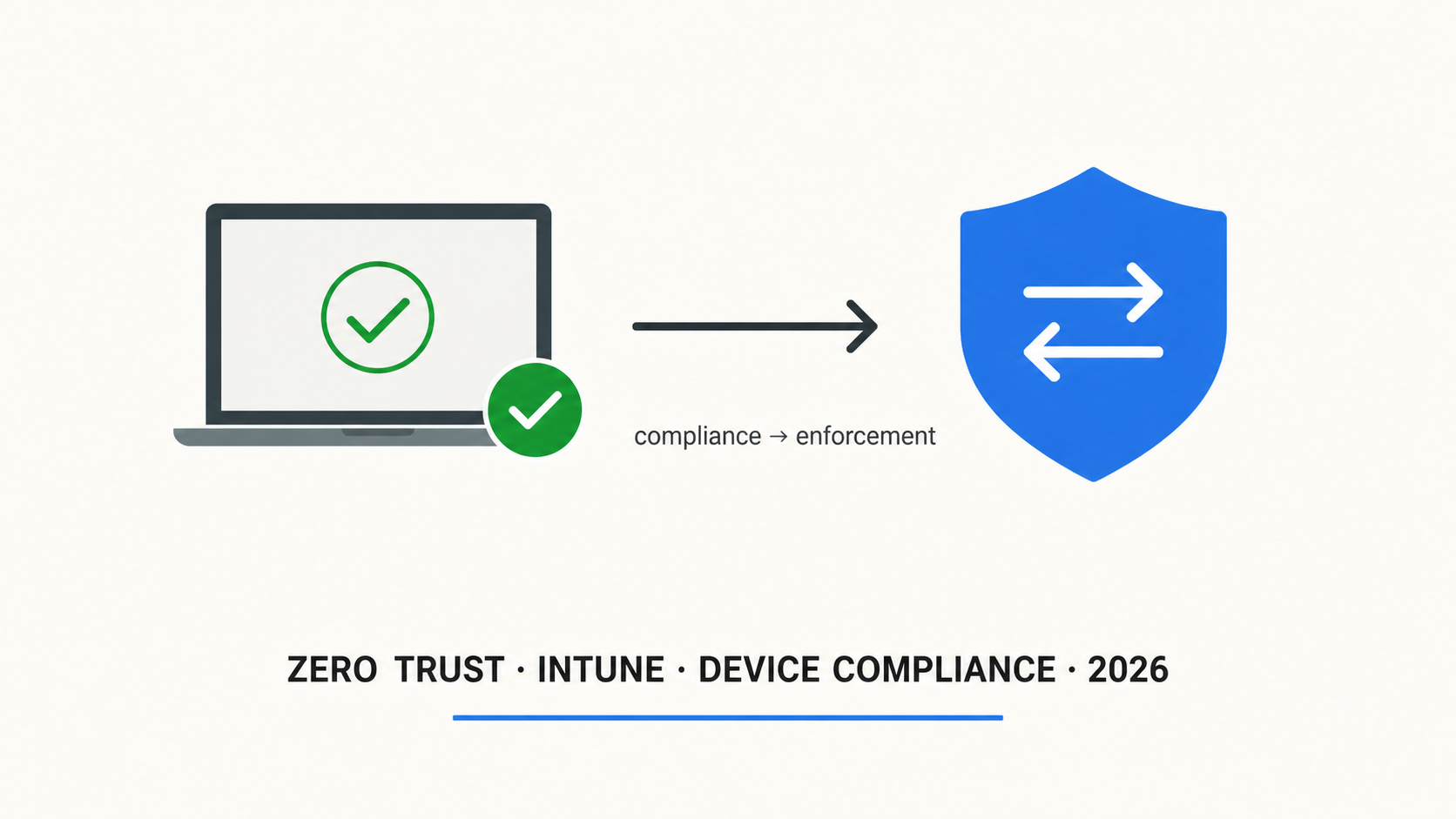
Zero Trust with Intune: How to Turn Device Compliance into Access Control
Intune compliance policies check device health. Conditional Access enforces access decisions based on that health. Without Conditional Access, compliance is monitoring. Without compliance, Conditional Access is guessing. This article covers the full device pillar implementation: compliance policies for Windows, macOS, iOS, and Android, Defender for Endpoint risk score integration, Conditional Access grant controls that require compliant devices, app protection policies for BYOD (MAM-WE), the "Require approved client app" retirement (June 30, 2026) and the OR transition pattern to "Require app protection policy," and a phased rollout approach that avoids the day-one lockout mistake.