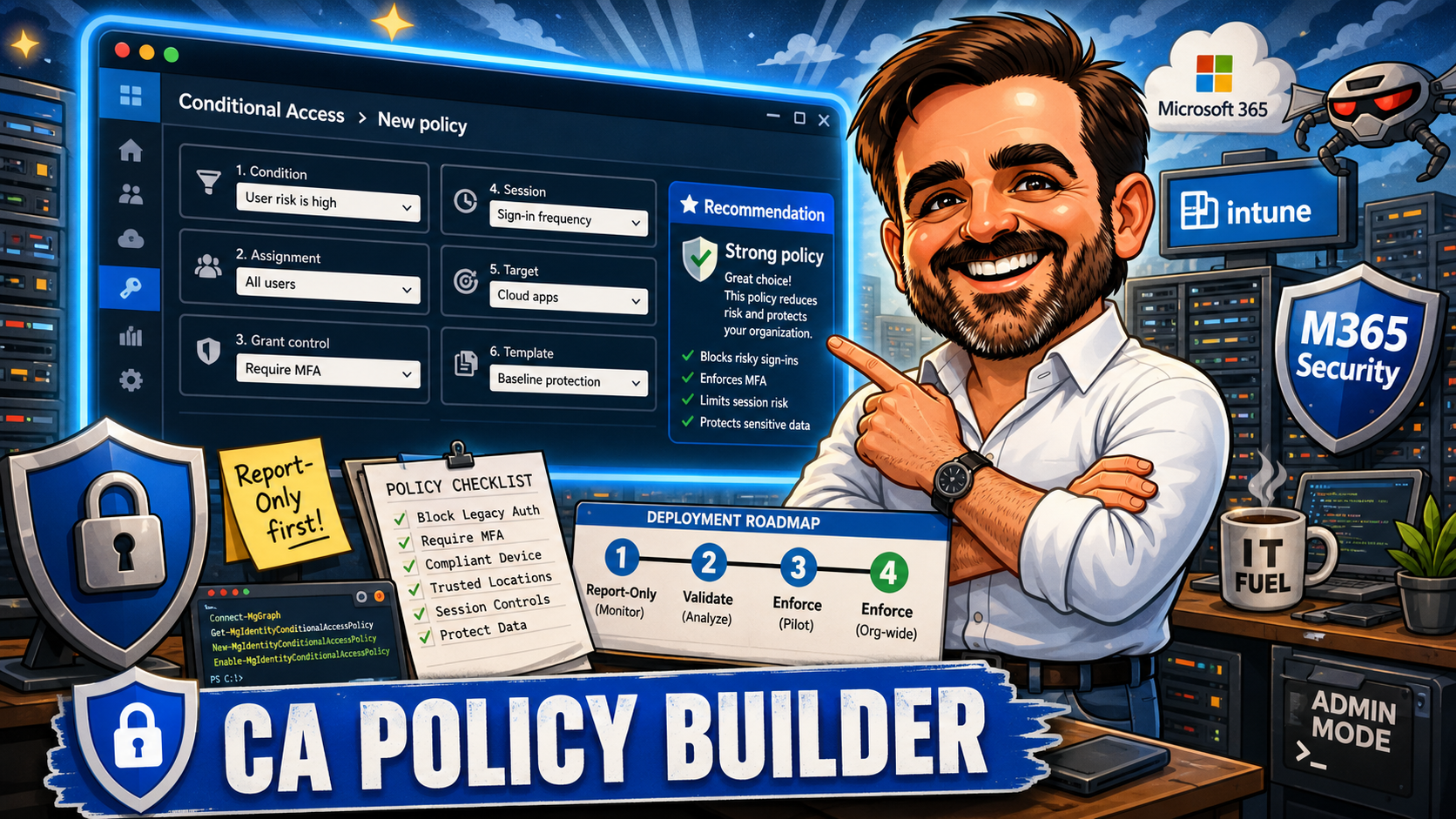
Microsoft 365 Conditional Access Policy Builder: A Practical Guide for 2026
This guide gives you an interactive decision tool, a recommended ten-policy baseline, a naming convention, a phased rollout sequence, and the field-tested advice I use in real Conditional Access deployments. Select your scenario across six dimensions and get a specific policy recommendation with a suggested name, rollout plan, testing notes, and licensing requirements. No data is sent anywhere. Everything runs in the browser.
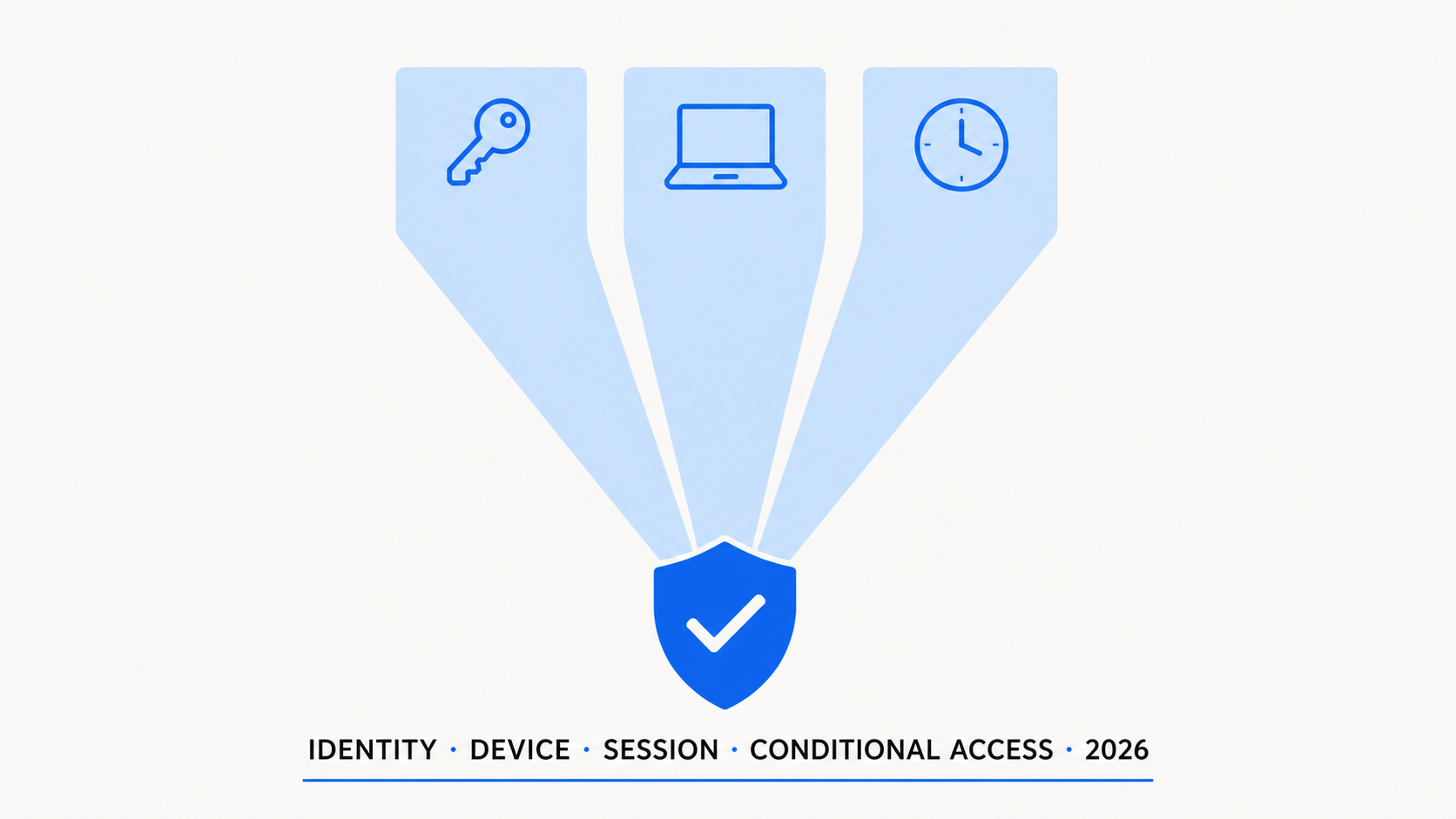
Identity, Device, Session: How Conditional Access Actually Makes Decisions
Every Conditional Access decision comes down to three signals: who you are, what you are using, and how that session behaves. Most admins invest heavily in the identity layer and under-invest in device and session controls. This article breaks down each pillar: identity evaluation (MFA, authentication strength, sign-in risk, user risk, PIM), device evaluation (compliance, hybrid join, device filters, managed vs unmanaged), session evaluation (sign-in frequency, persistent browser, CAE, token protection, adaptive lifetime), how the three pillars combine in CA policy logic with the "most restrictive wins" rule, when to focus on which pillar by scenario, common policy patterns, and where this model breaks in real environments.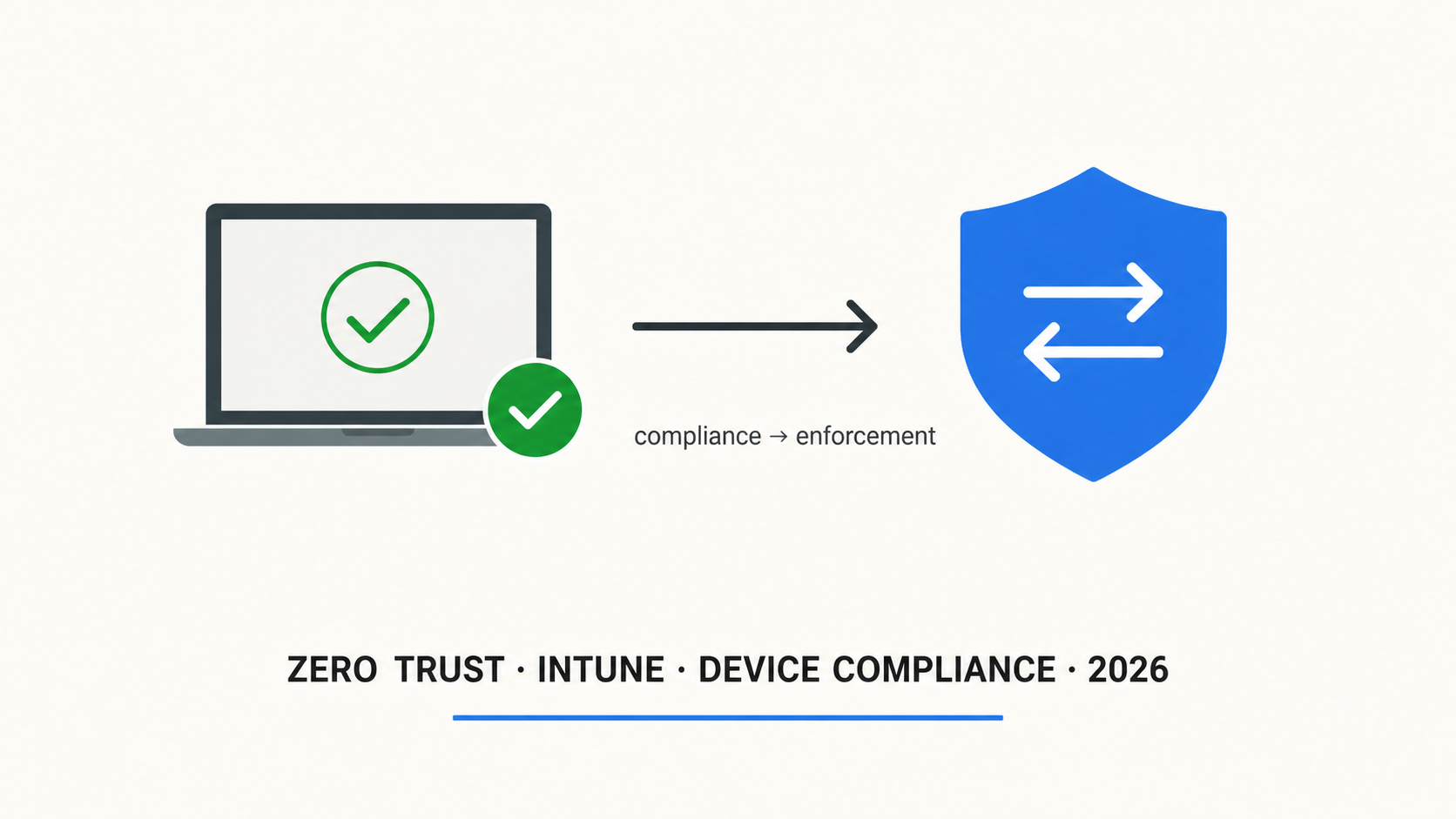
Zero Trust with Intune: How to Turn Device Compliance into Access Control
Intune compliance policies check device health. Conditional Access enforces access decisions based on that health. Without Conditional Access, compliance is monitoring. Without compliance, Conditional Access is guessing. This article covers the full device pillar implementation: compliance policies for Windows, macOS, iOS, and Android, Defender for Endpoint risk score integration, Conditional Access grant controls that require compliant devices, app protection policies for BYOD (MAM-WE), the "Require approved client app" retirement (June 30, 2026) and the OR transition pattern to "Require app protection policy," and a phased rollout approach that avoids the day-one lockout mistake.