Zero Trust for SMBs vs Enterprise: Same Principles, Different Reality
A 50-person accounting firm and a 5,000-person manufacturer face the same threats but have wildly different resources. Copying an enterprise Zero Trust playbook into an SMB creates complexity that no small IT team can maintain — and the complexity itself becomes a risk. This final article covers: the phased SMB approach (identity first, devices second, data third), the enterprise framework with full staffing, the complexity threshold by org size with recommended CA policy counts and licensing, six things SMBs should never copy from enterprise (FIDO2 at scale, Sentinel without SOC, Workload Identity CA, advanced session proxy), Microsoft-managed CA policies, practical recommendations per org size from 50 to 2,000+ users, and a Zero Trust strategy checklist. Most SMB breaches do not happen because of missing features. They happen because of misconfigured or misunderstood ones.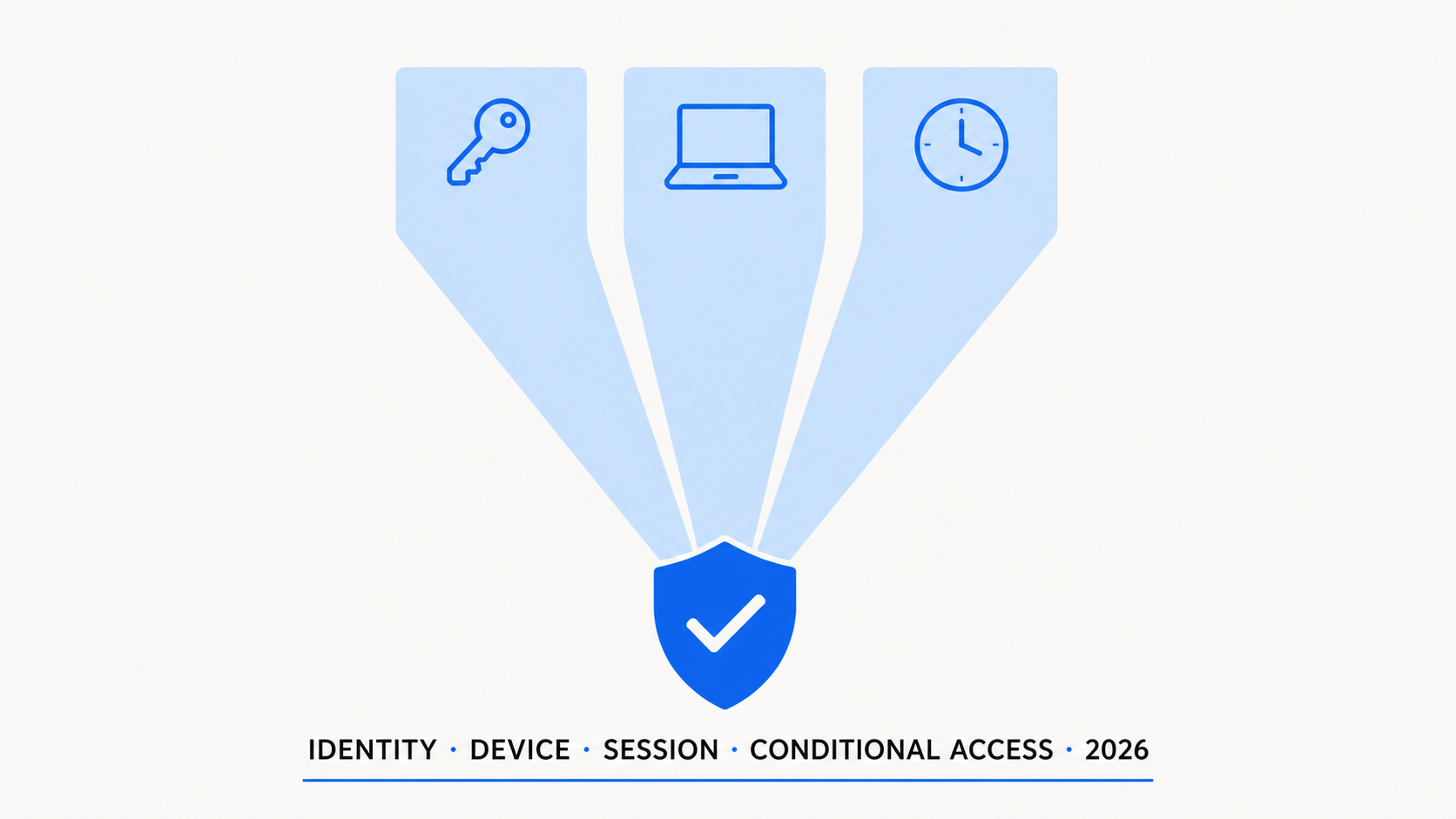
Identity, Device, Session: How Conditional Access Actually Makes Decisions
Every Conditional Access decision comes down to three signals: who you are, what you are using, and how that session behaves. Most admins invest heavily in the identity layer and under-invest in device and session controls. This article breaks down each pillar: identity evaluation (MFA, authentication strength, sign-in risk, user risk, PIM), device evaluation (compliance, hybrid join, device filters, managed vs unmanaged), session evaluation (sign-in frequency, persistent browser, CAE, token protection, adaptive lifetime), how the three pillars combine in CA policy logic with the "most restrictive wins" rule, when to focus on which pillar by scenario, common policy patterns, and where this model breaks in real environments.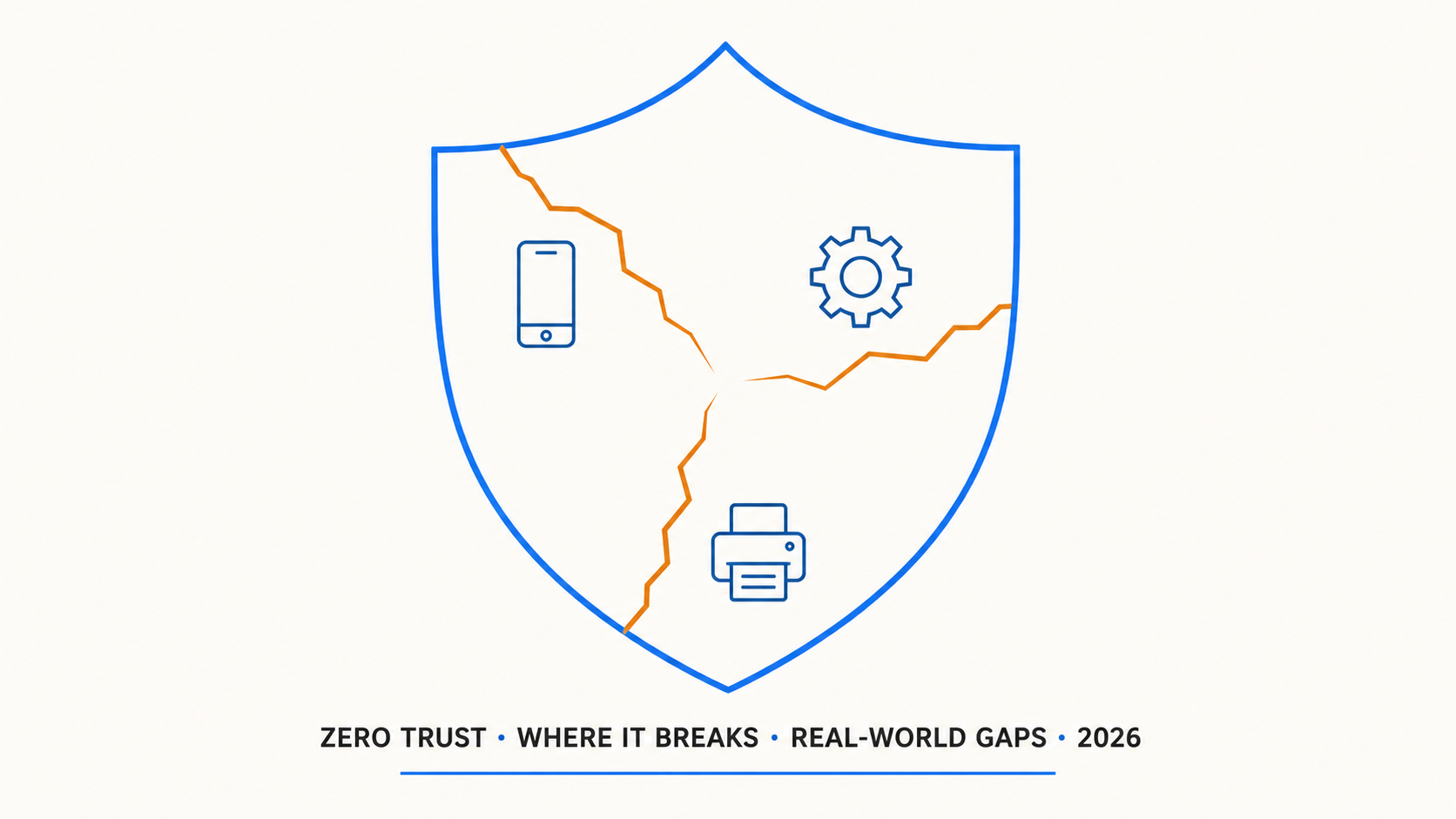
Zero Trust in the Real World: The Gaps You Cannot Ignore
Every Zero Trust deployment has gaps. The slide decks do not mention them. The vendor assessments gloss over them. But they are there, in every tenant. This article is the honest assessment: the BYOD browser gap where unmanaged browsers bypass app protection entirely, legacy apps that cannot do modern auth and sit outside the CA perimeter, printers and IoT devices that cannot authenticate, third-party VPNs that mask device posture, service accounts that cannot do MFA, guest users with unknown MFA quality and no device compliance, a gap severity matrix, and a practical gap assessment checklist. Zero Trust does not fail because of technology. It fails because of compromises made for usability, legacy systems, and operational reality.