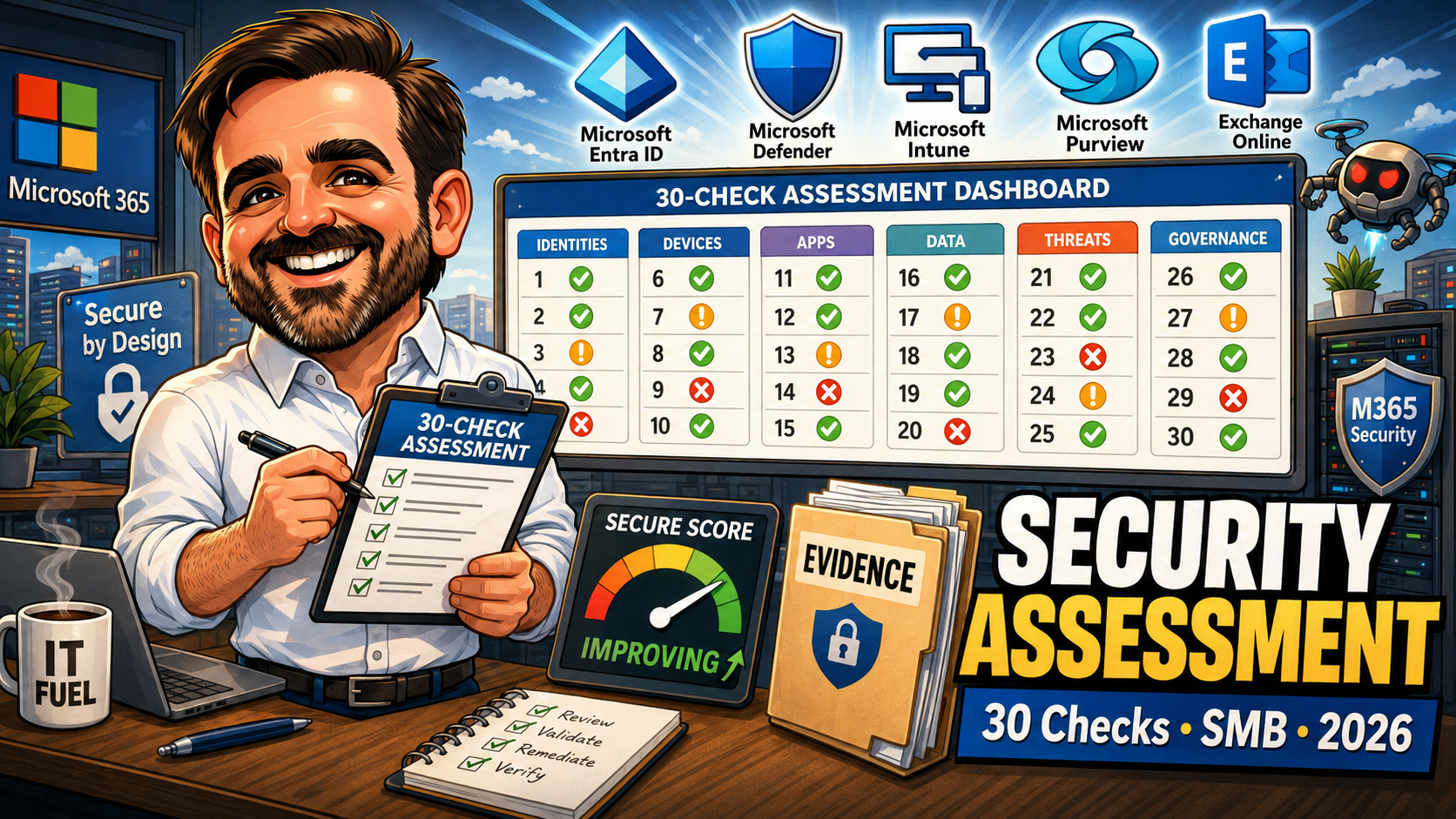
Microsoft 365 Security Assessment for SMBs: The 30 Checks I Run in Every Tenant (2026)
The 30 checks I run in every Microsoft 365 SMB tenant: identity, email, devices, data, monitoring and governance — with evidence pack and quarterly cadence.
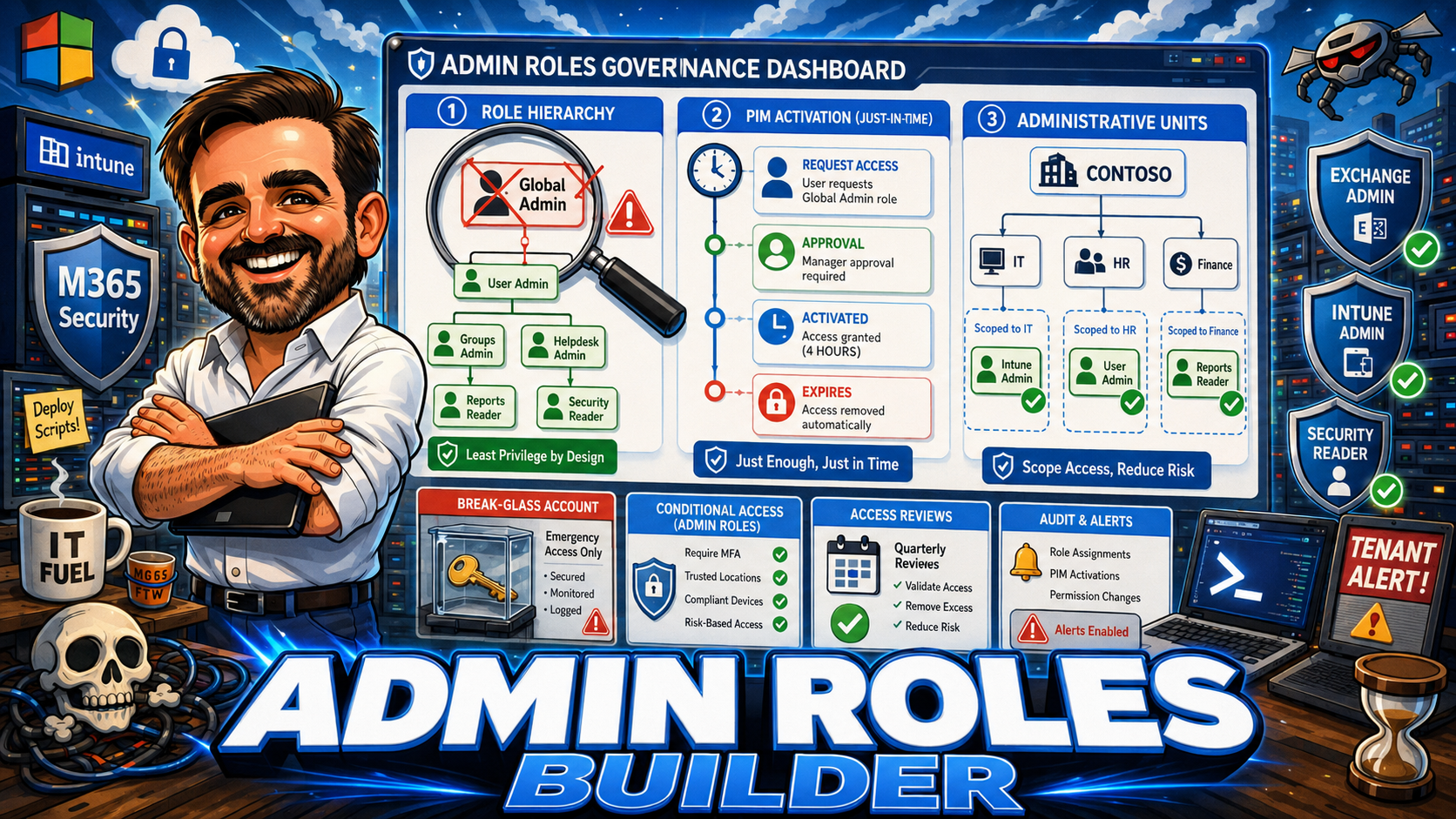
Microsoft 365 Admin Roles Builder 2026: Global Admin Should Be the Exception
Global Administrator should be the exception, not the operating model. This interactive guide helps Microsoft 365 admins map real admin tasks to least-privileged roles, scope them with Administrative Units, activate them just in time with PIM, and review them on a regular cadence. Includes a 10-input governance scoring engine, role decision framework, break-glass account setup, Conditional Access policies for admins, and 16 common admin role mistakes from real tenants.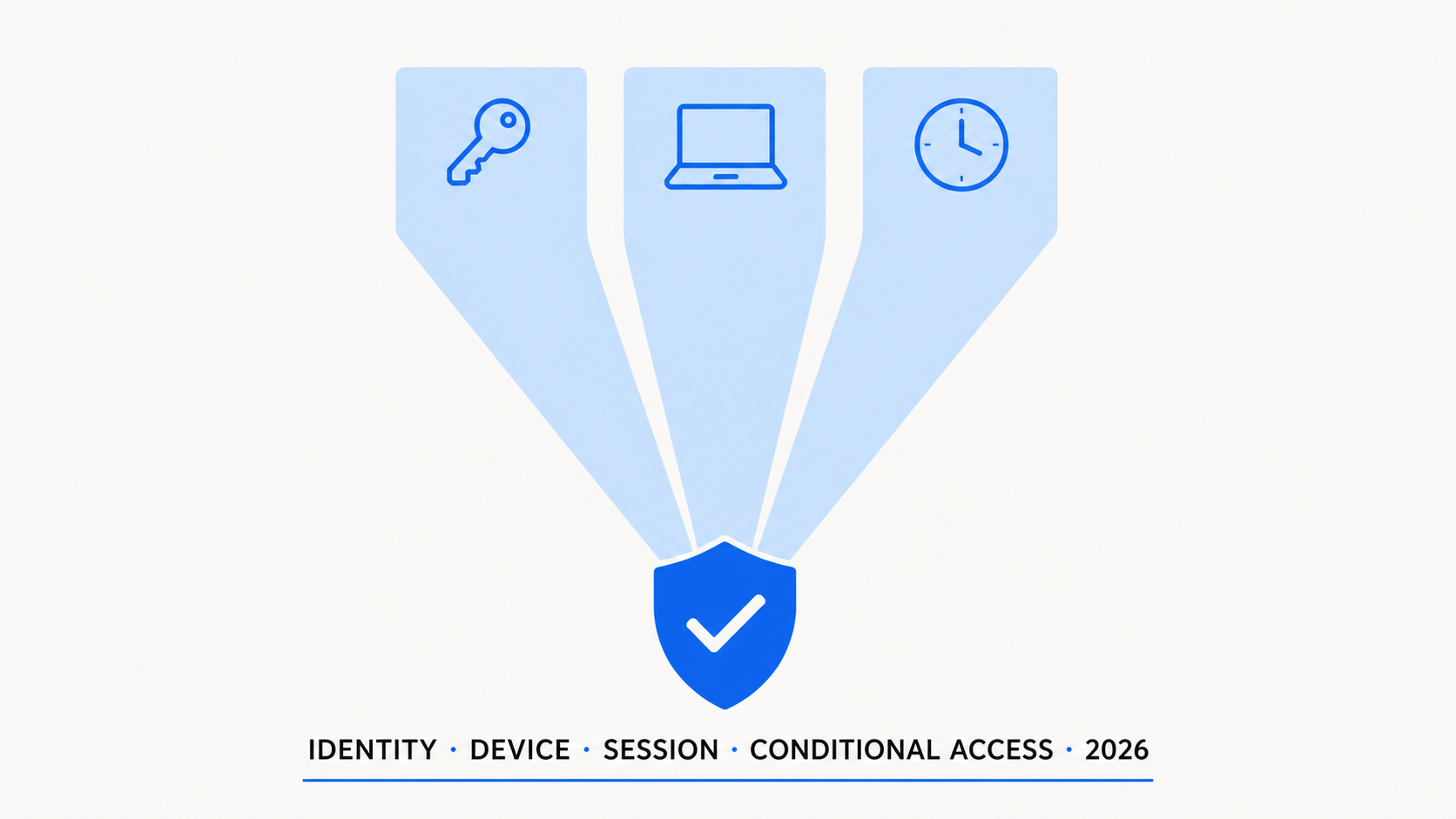
Identity, Device, Session: How Conditional Access Actually Makes Decisions
Every Conditional Access decision comes down to three signals: who you are, what you are using, and how that session behaves. Most admins invest heavily in the identity layer and under-invest in device and session controls. This article breaks down each pillar: identity evaluation (MFA, authentication strength, sign-in risk, user risk, PIM), device evaluation (compliance, hybrid join, device filters, managed vs unmanaged), session evaluation (sign-in frequency, persistent browser, CAE, token protection, adaptive lifetime), how the three pillars combine in CA policy logic with the "most restrictive wins" rule, when to focus on which pillar by scenario, common policy patterns, and where this model breaks in real environments.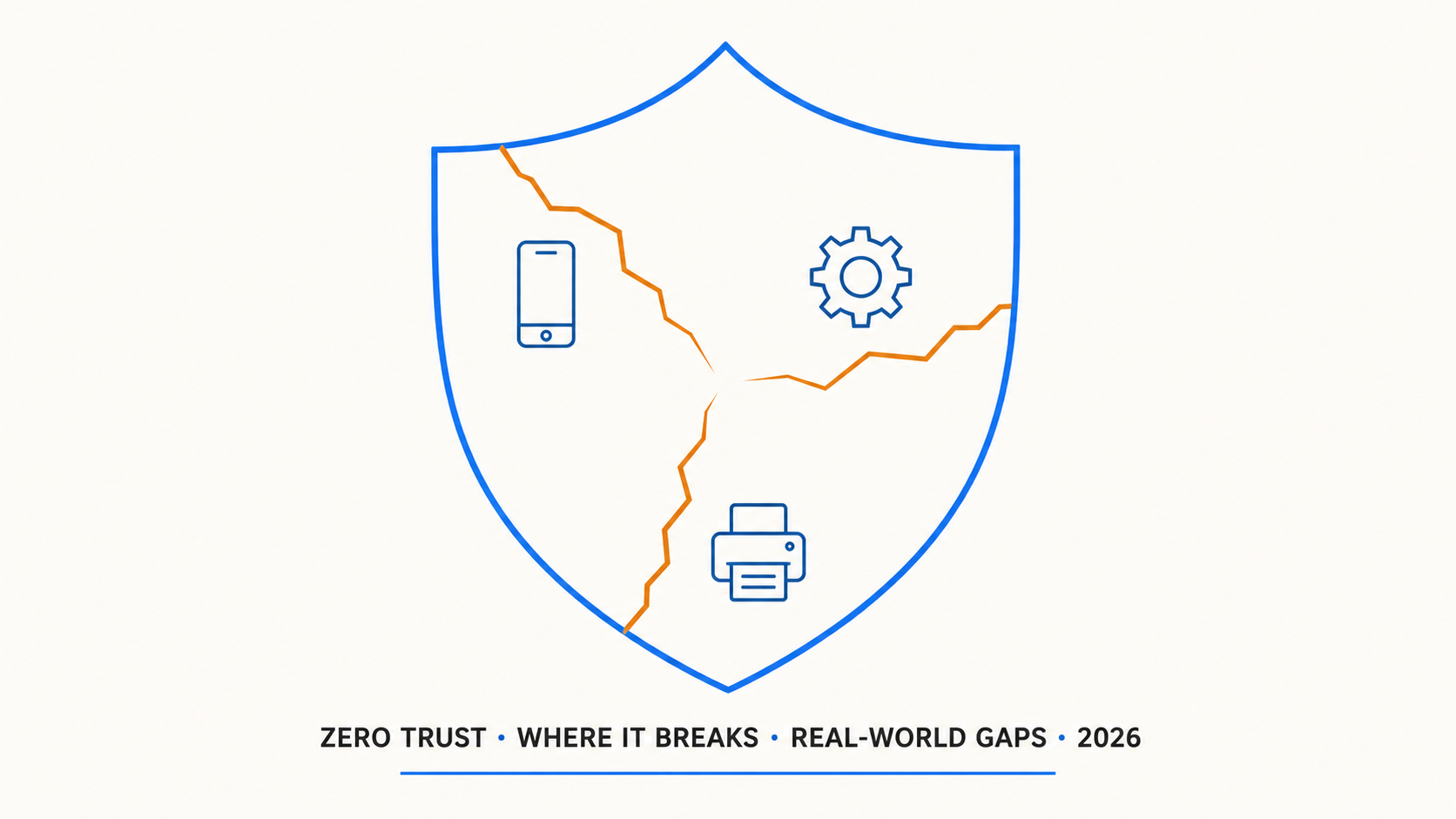
Zero Trust in the Real World: The Gaps You Cannot Ignore
Every Zero Trust deployment has gaps. The slide decks do not mention them. The vendor assessments gloss over them. But they are there, in every tenant. This article is the honest assessment: the BYOD browser gap where unmanaged browsers bypass app protection entirely, legacy apps that cannot do modern auth and sit outside the CA perimeter, printers and IoT devices that cannot authenticate, third-party VPNs that mask device posture, service accounts that cannot do MFA, guest users with unknown MFA quality and no device compliance, a gap severity matrix, and a practical gap assessment checklist. Zero Trust does not fail because of technology. It fails because of compromises made for usability, legacy systems, and operational reality.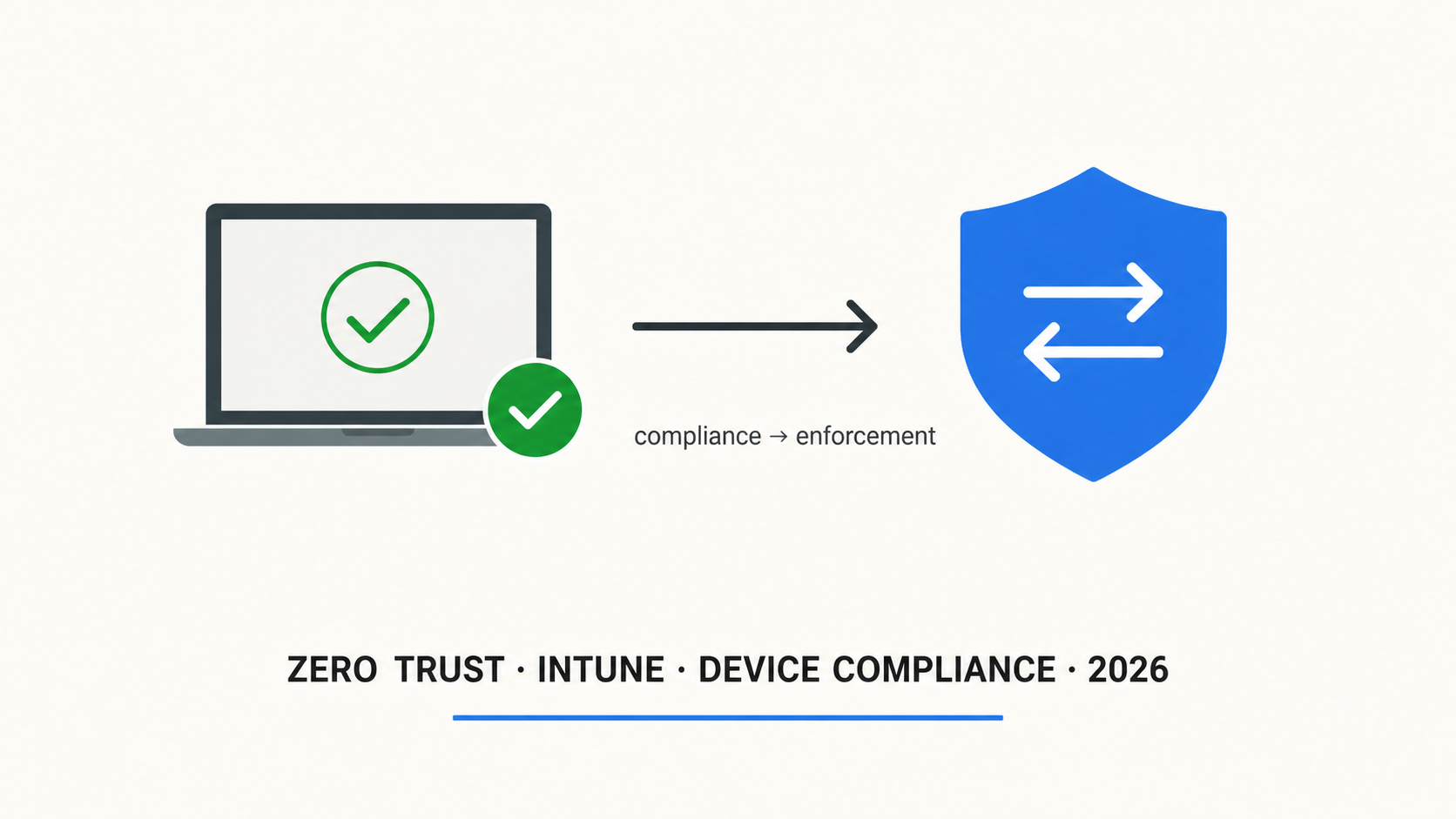
Zero Trust with Intune: How to Turn Device Compliance into Access Control
Intune compliance policies check device health. Conditional Access enforces access decisions based on that health. Without Conditional Access, compliance is monitoring. Without compliance, Conditional Access is guessing. This article covers the full device pillar implementation: compliance policies for Windows, macOS, iOS, and Android, Defender for Endpoint risk score integration, Conditional Access grant controls that require compliant devices, app protection policies for BYOD (MAM-WE), the "Require approved client app" retirement (June 30, 2026) and the OR transition pattern to "Require app protection policy," and a phased rollout approach that avoids the day-one lockout mistake.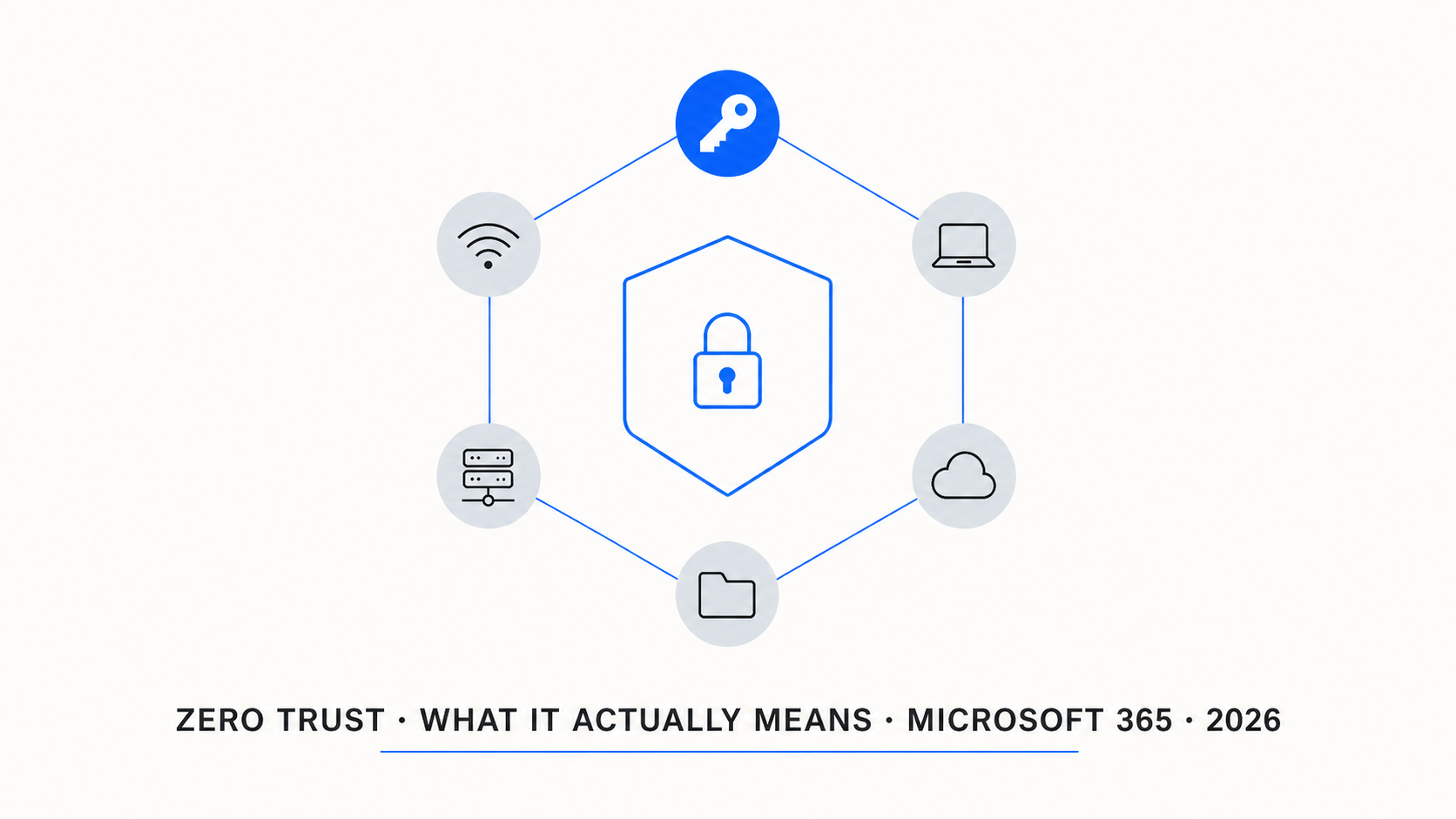
Zero Trust in Microsoft 365: What It Actually Means (and What Most Get Wrong)
Zero Trust is everywhere — in vendor pitches, compliance checklists, and security strategies. But most organisations treat it as a product to buy rather than a model to implement. This article cuts through the marketing: what Zero Trust actually is (and is not), the six technology pillars mapped to your Microsoft 365 stack, why Conditional Access is the policy engine that connects everything, why MFA alone does not equal Zero Trust, and what the 2026 "All resources" enforcement change means for your tenant. Includes a visual mental model and a practical framework for getting started.
Secure Admin Workstations for Microsoft 365: The PAW Guide for Real-World Tenants
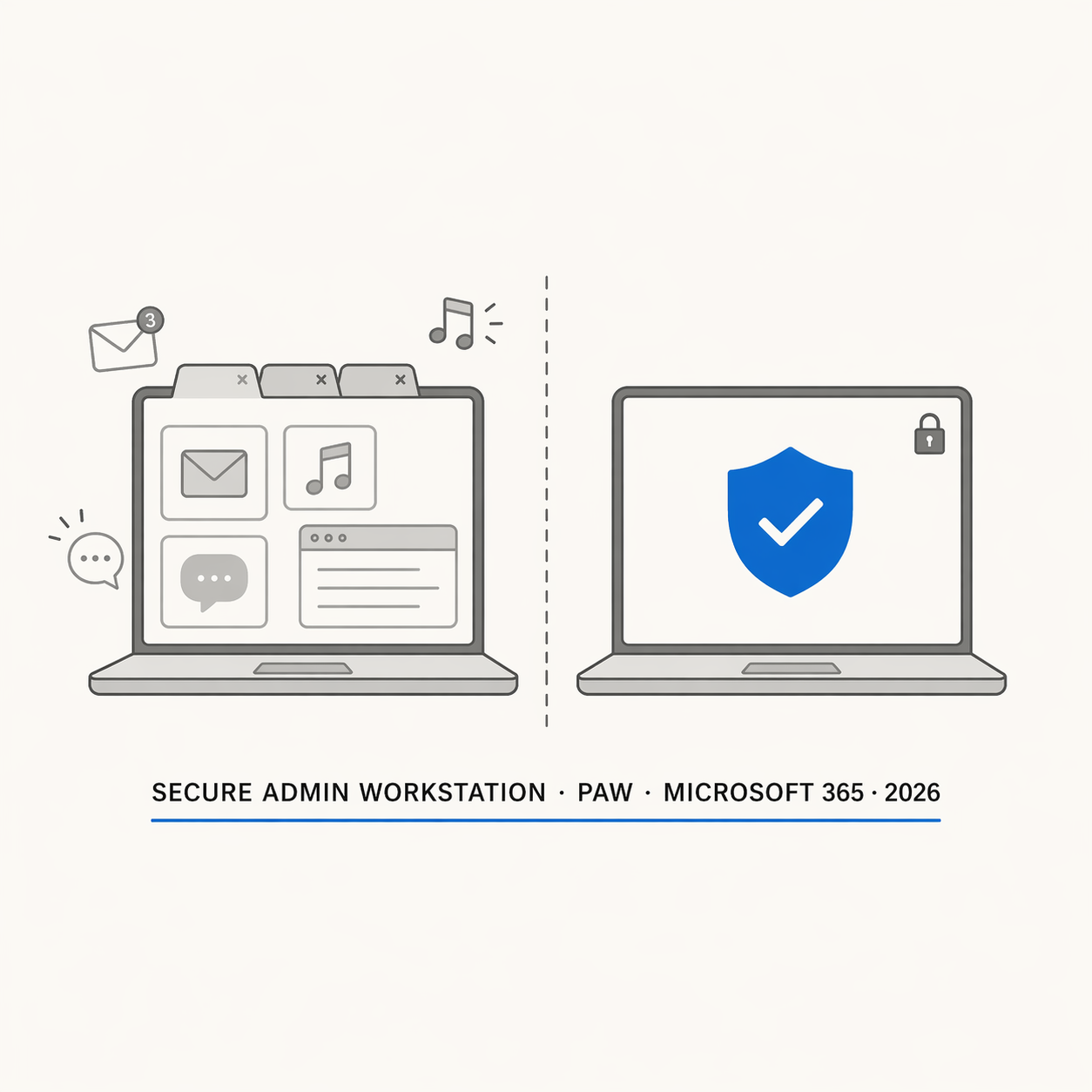
Build a Privileged Access Workstation for Microsoft 365 with Intune, Conditional Access, PIM, WDAC, and Windows LAPS. Practical PAW guide for SMB and mid-market tenants.
Password Protection in Microsoft Defender for Identity (Preview)
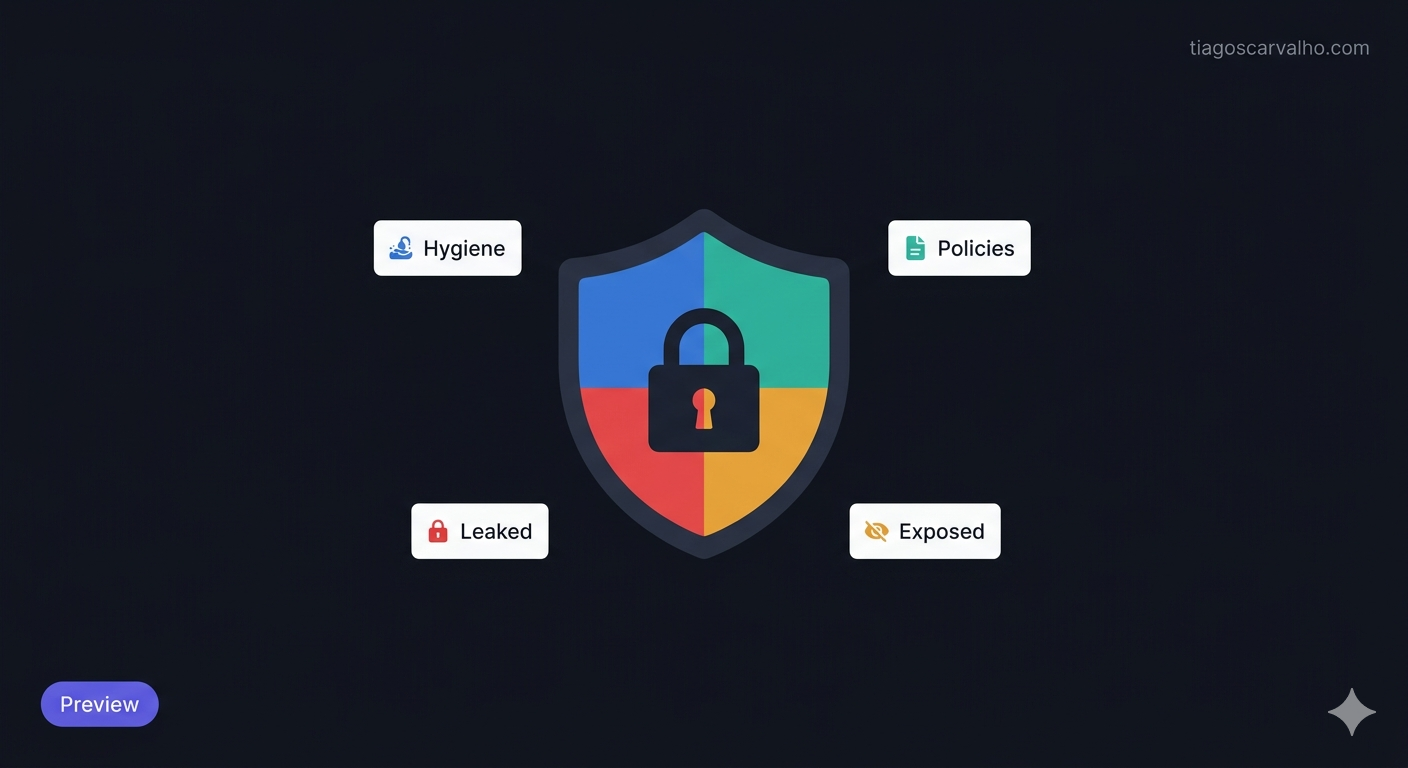
A new page in Microsoft Defender XDR that brings password-related risk from Active Directory, Entra ID and Okta into one place, leaked credentials, exposed passwords, weak policies and hygiene gaps, all actionable from a single view.